

The balalaika is an instrument of Russian origin. It has 3 strings with a typical tuning of E4, E4, A4.
Instruments originating from Eastern Europe, Asia or Africa.
The balalaika is an instrument of Russian origin. It has 3 strings with a typical tuning of E4, E4, A4.
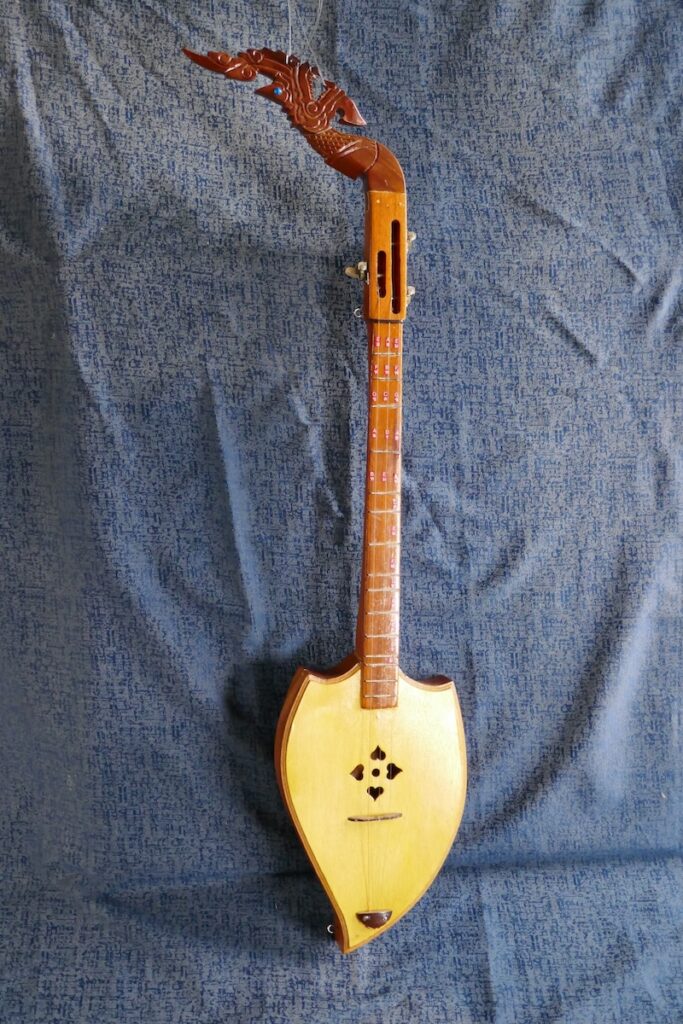

The phin is an instrument from Thailand. It has 3 strings with a typical tuning of E A E. Like dulcimers it has diatonic rather than chromatic frets.
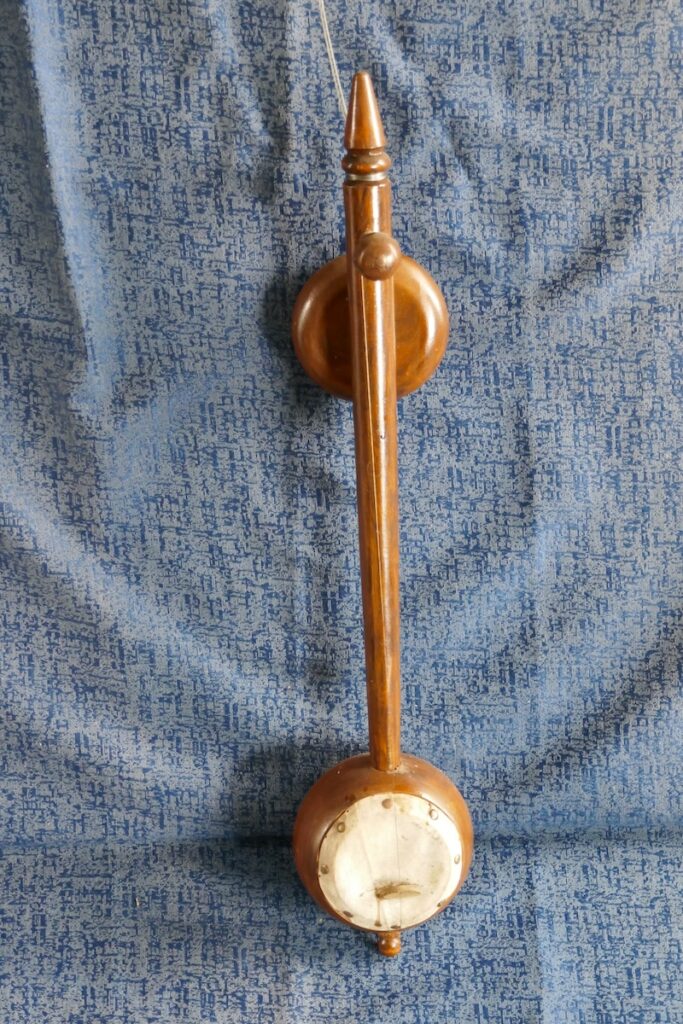
Looks a bit like an ektara or tumbi but has the second resonator at the back.
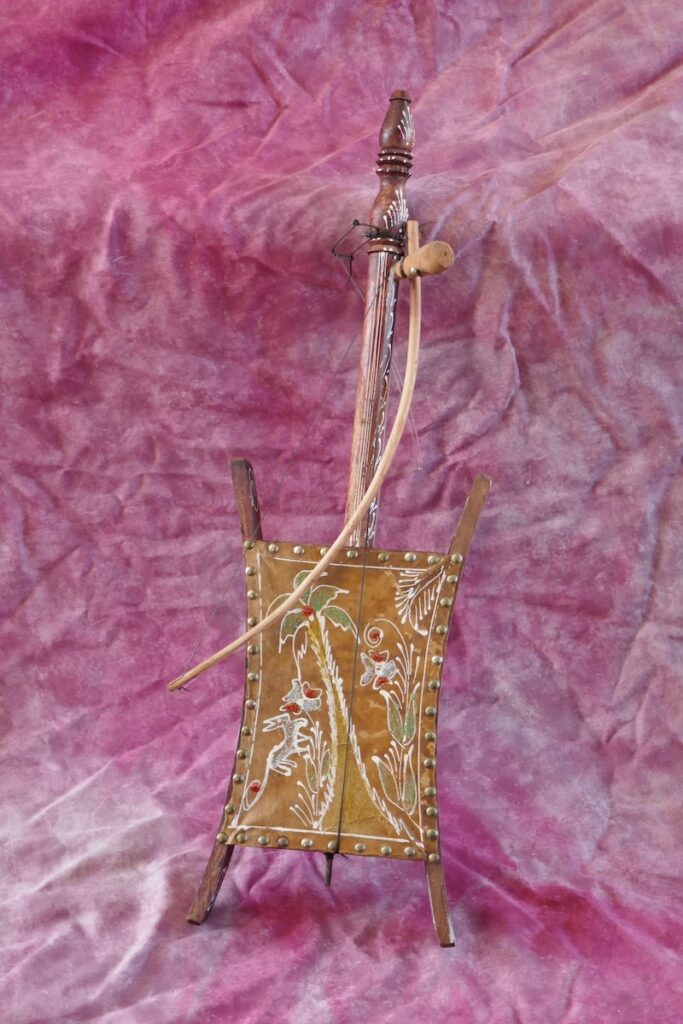
I have forgotten what this is so will have to find out. It is a single string instrument for use with a bow.
Possibly a rebab or rebaba which do have a wide range of shapes depending on which country they are from.
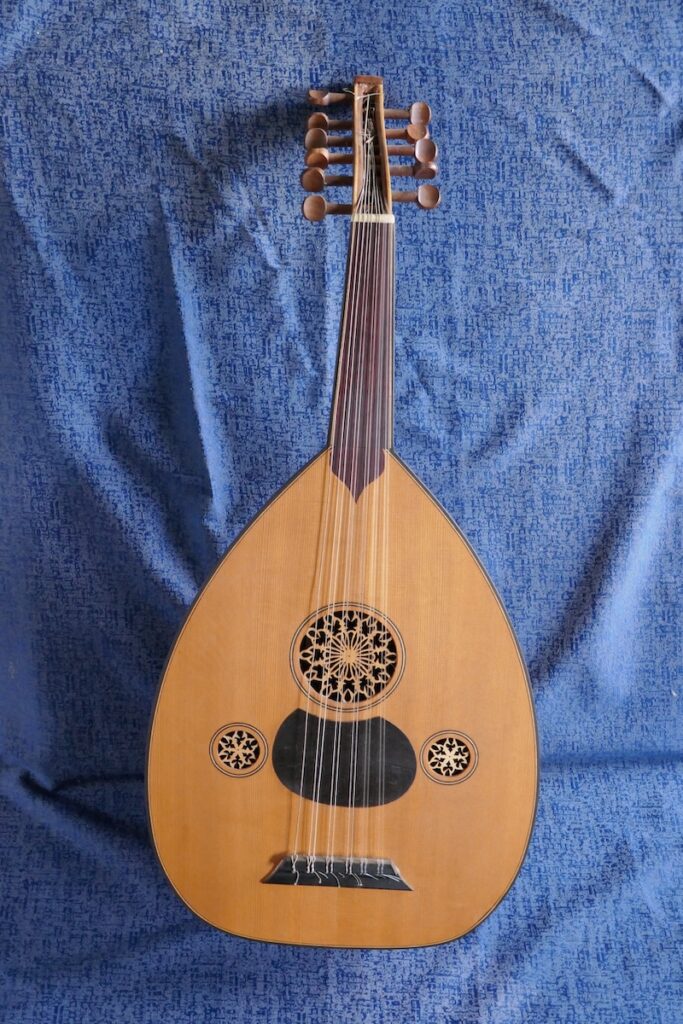
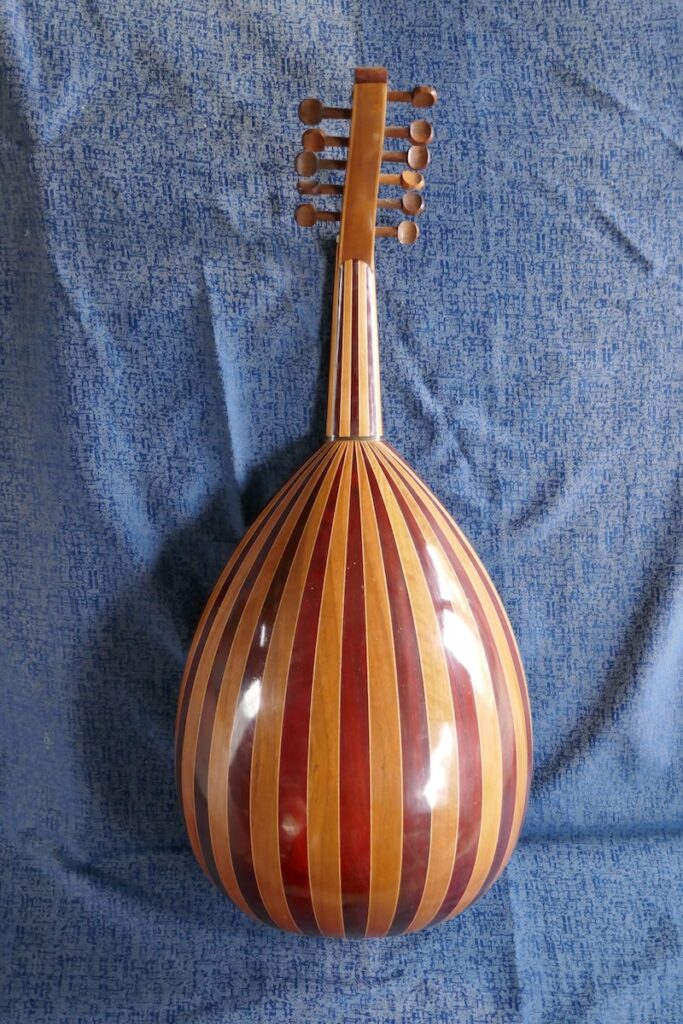
The oud is of middle-eastern origin and is a precursor to the lute. This one has 11 strings arranged in 6 courses. Common tunings are D2, G2/G2, A2/A2, D3/D3, G3/G3, C4/C4 or C2, F2/F2 A2/A2, D3/D3, G3/G3, C4/C4. Unlike lutes ouds are fretless.
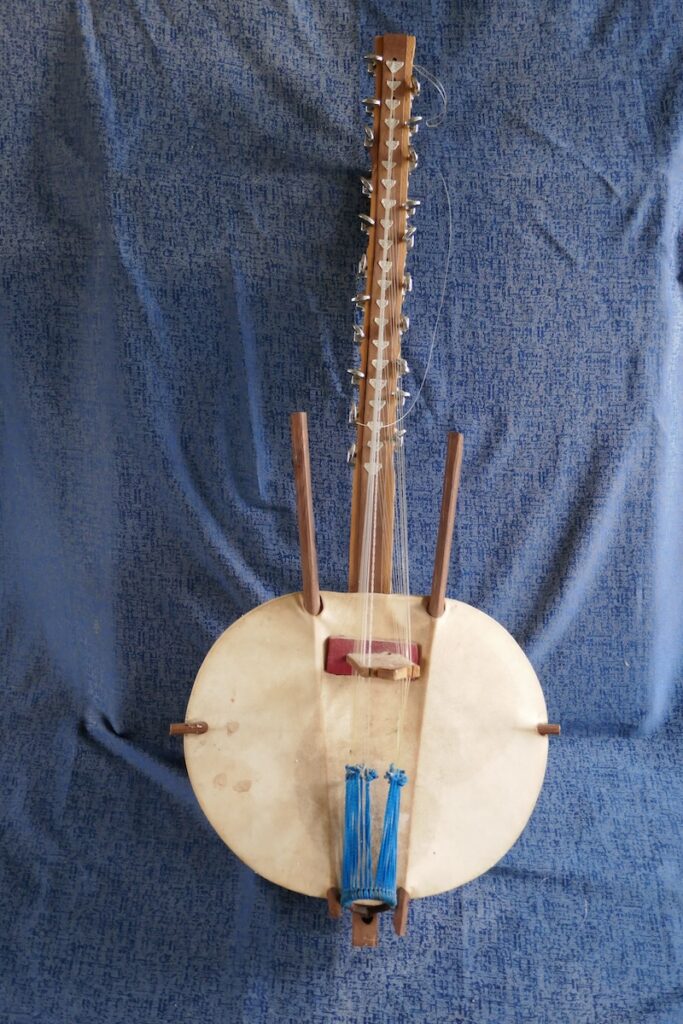
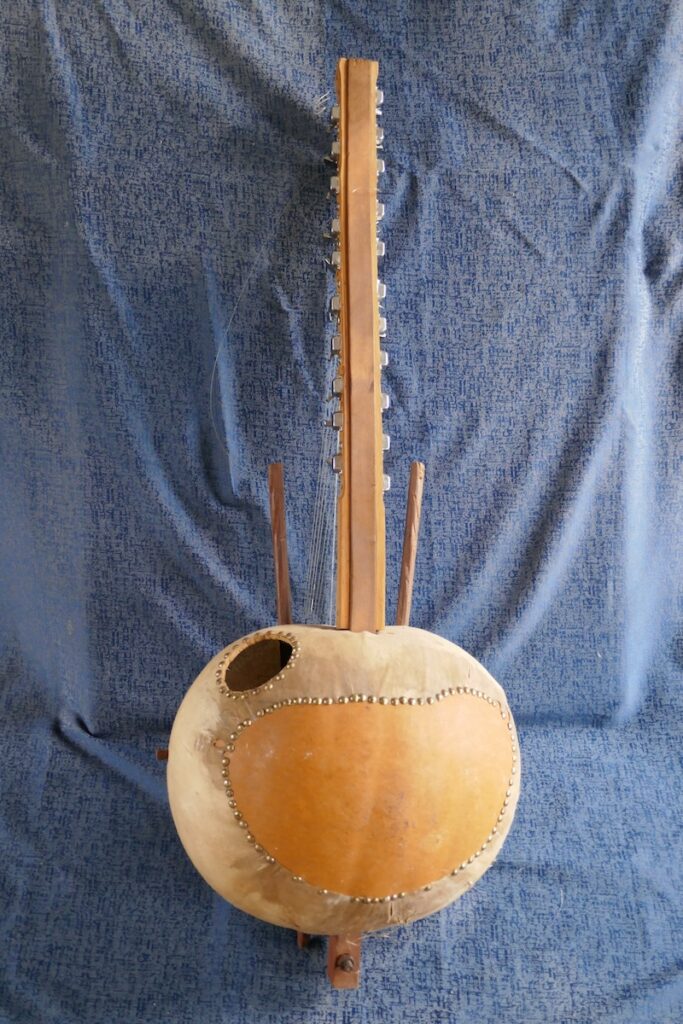
The kora is an instrument from West Africa with the body made of a gourd covered in animal skin. It has 21 strings and has similarities to a harp in that strings are not fretted, however playing techniques are very different to the harp. This one has guitar tuners rather than the traditional leather rings.
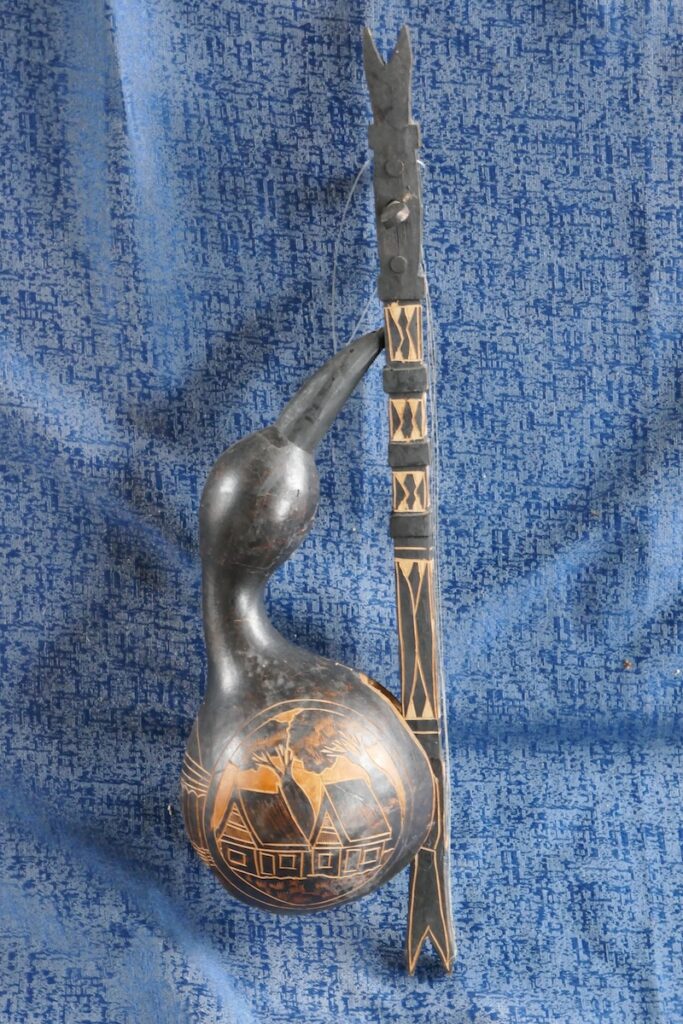
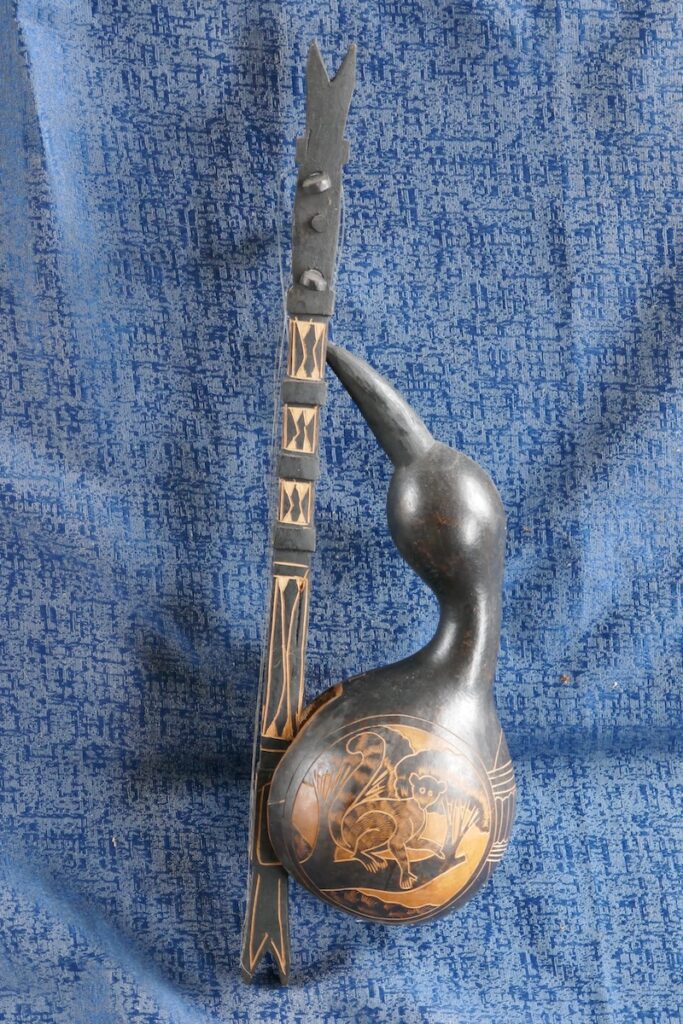
I think this is a lokanga voatavo (lokango voatovo) or tzetze or zeze which is a small African instrument. This one has 3 strings on a stick attached to a gourd.
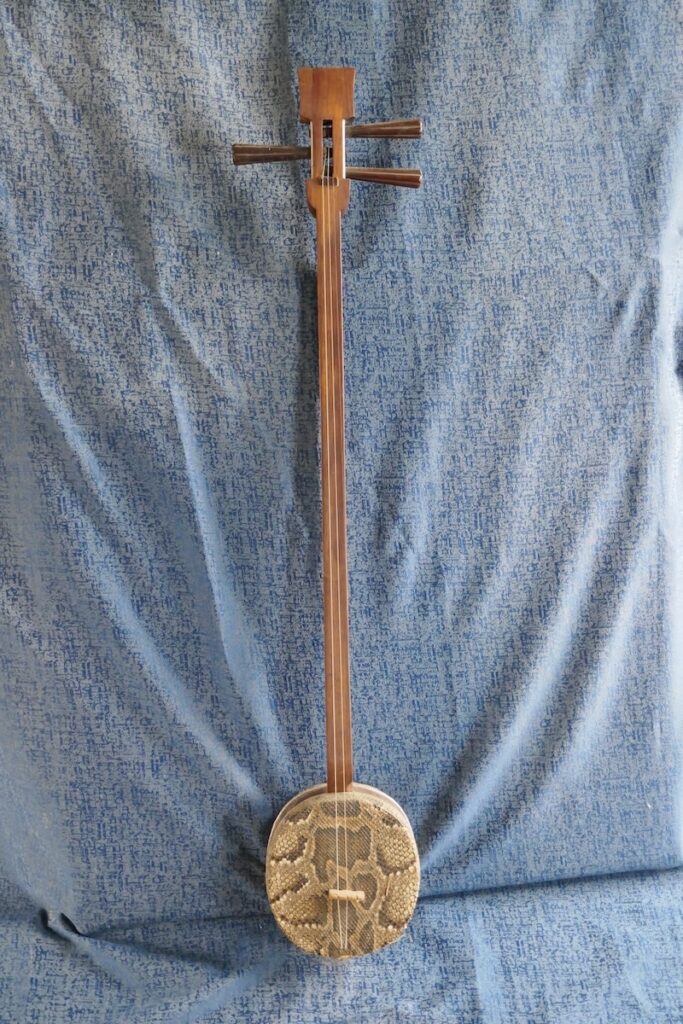
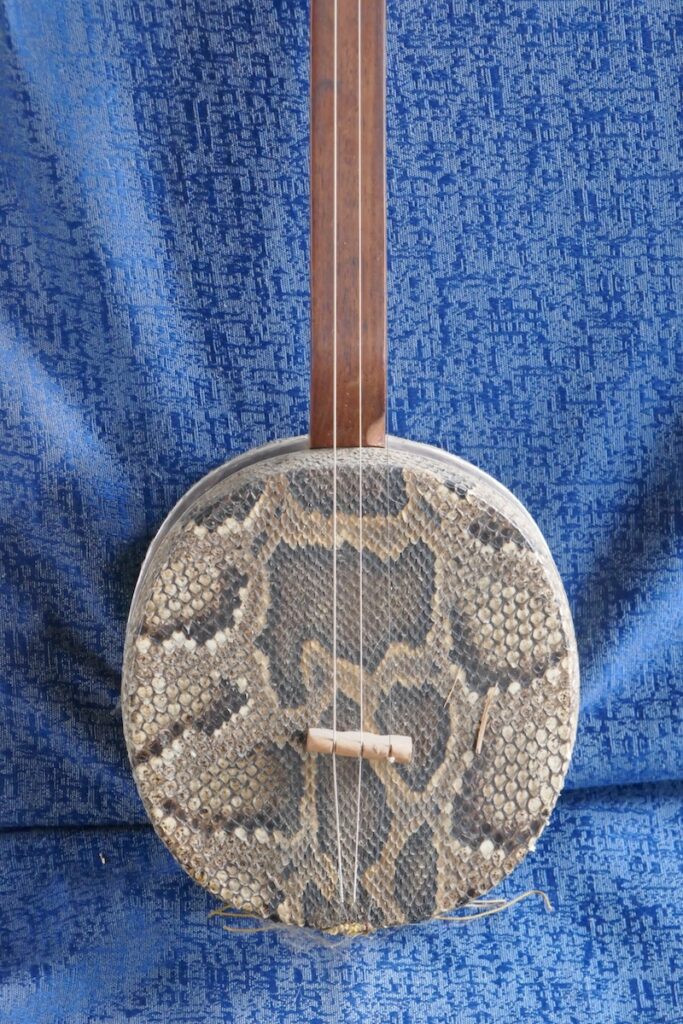
The sanxian is a traditional fretless 3 string instrument from China with snake skin used as the head.
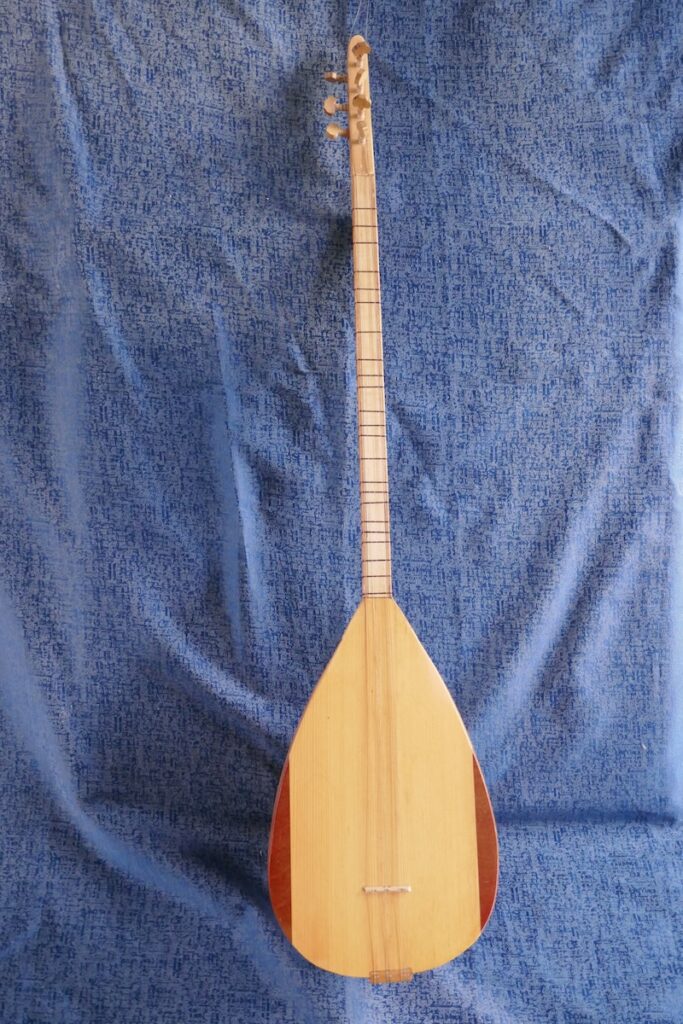
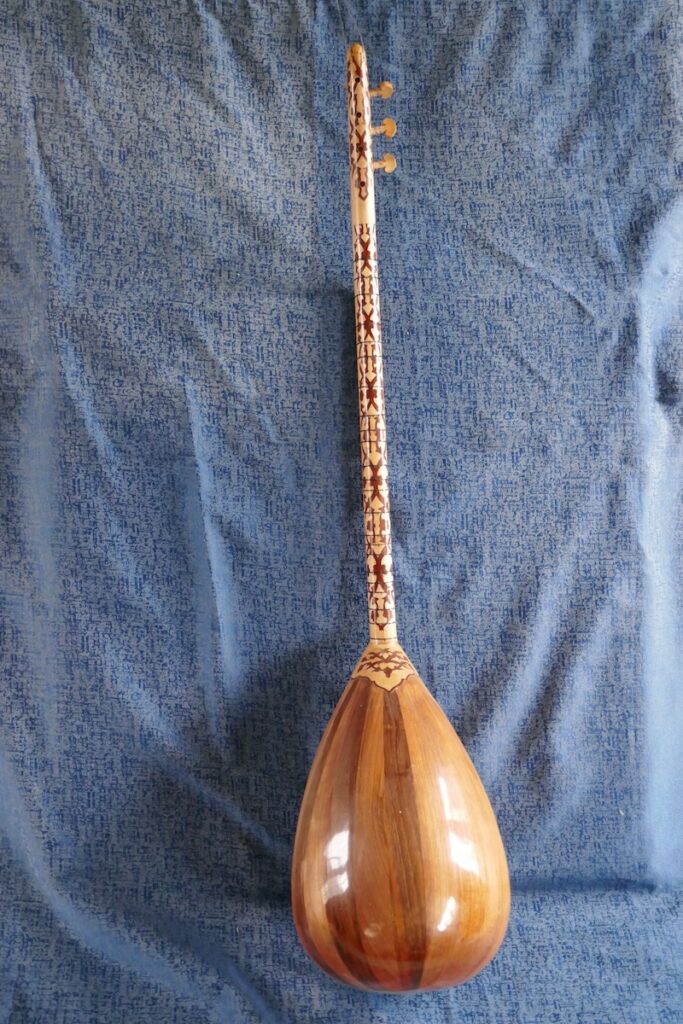
The saz (or bağlama) is an instrument of middle-eastern origin. Naming conventions vary a bit but this larger saz is often known as a bağlama. I also have a smaller one known as a cura saz.
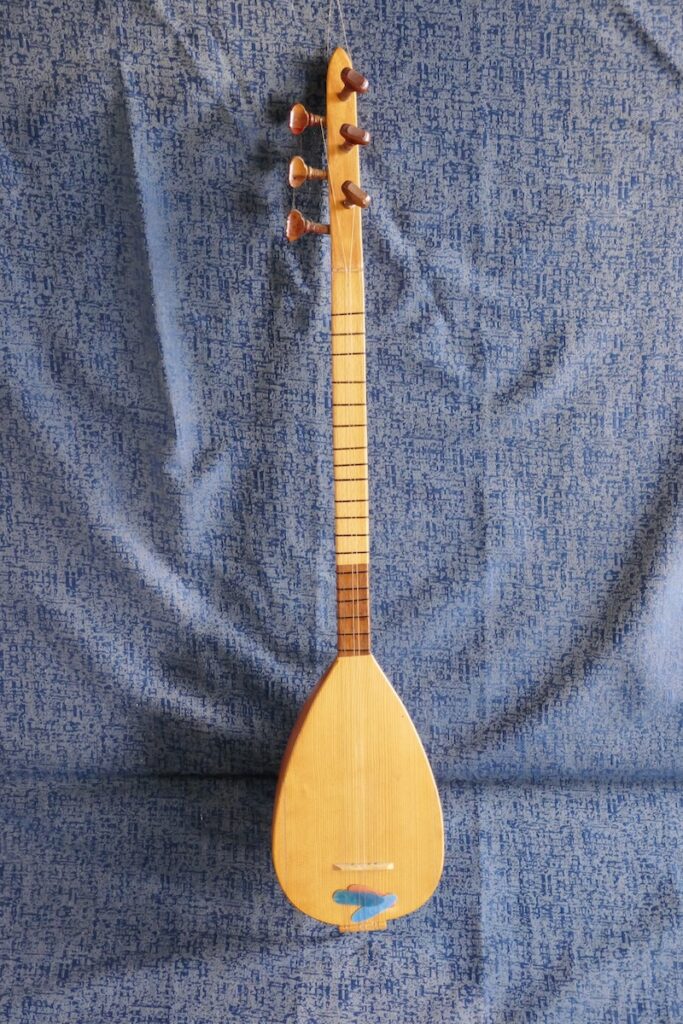
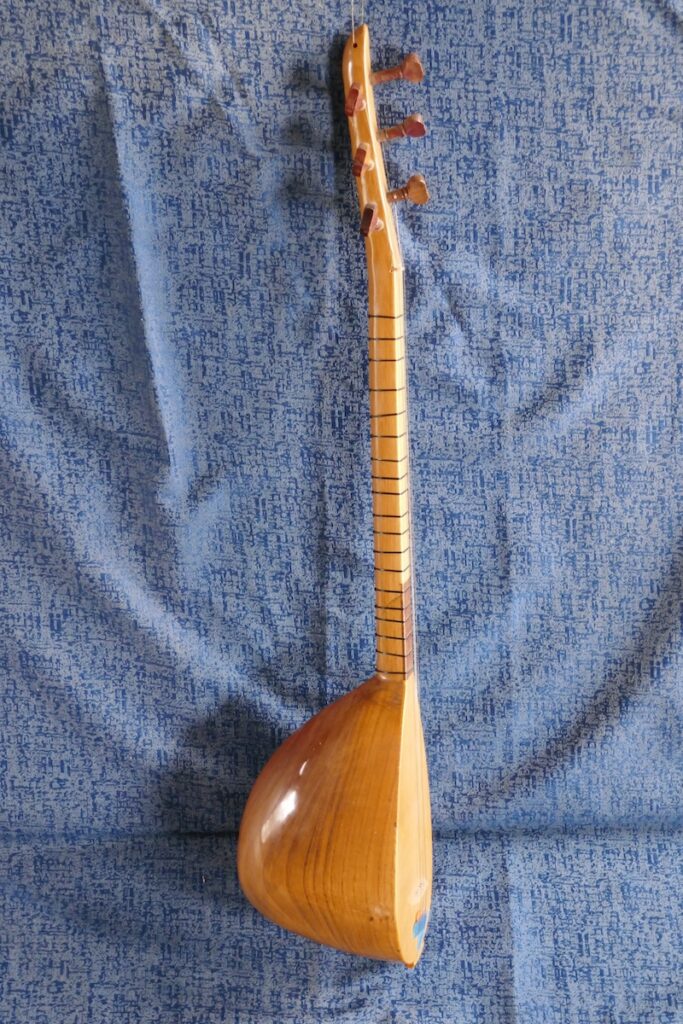
The cura saz is an instrument of middle-eastern origin, especially the areas around Turkey. Naming conventions vary a bit but this small saz is often known as a cura saz. I also have a larger one known as a bağlama saz.